> READ NORTH-AMERICAN-QSO-PARTY-SSB-2026
Our First Serious Run at the North American QSO Party
Our First Serious Run at the North American QSO Party
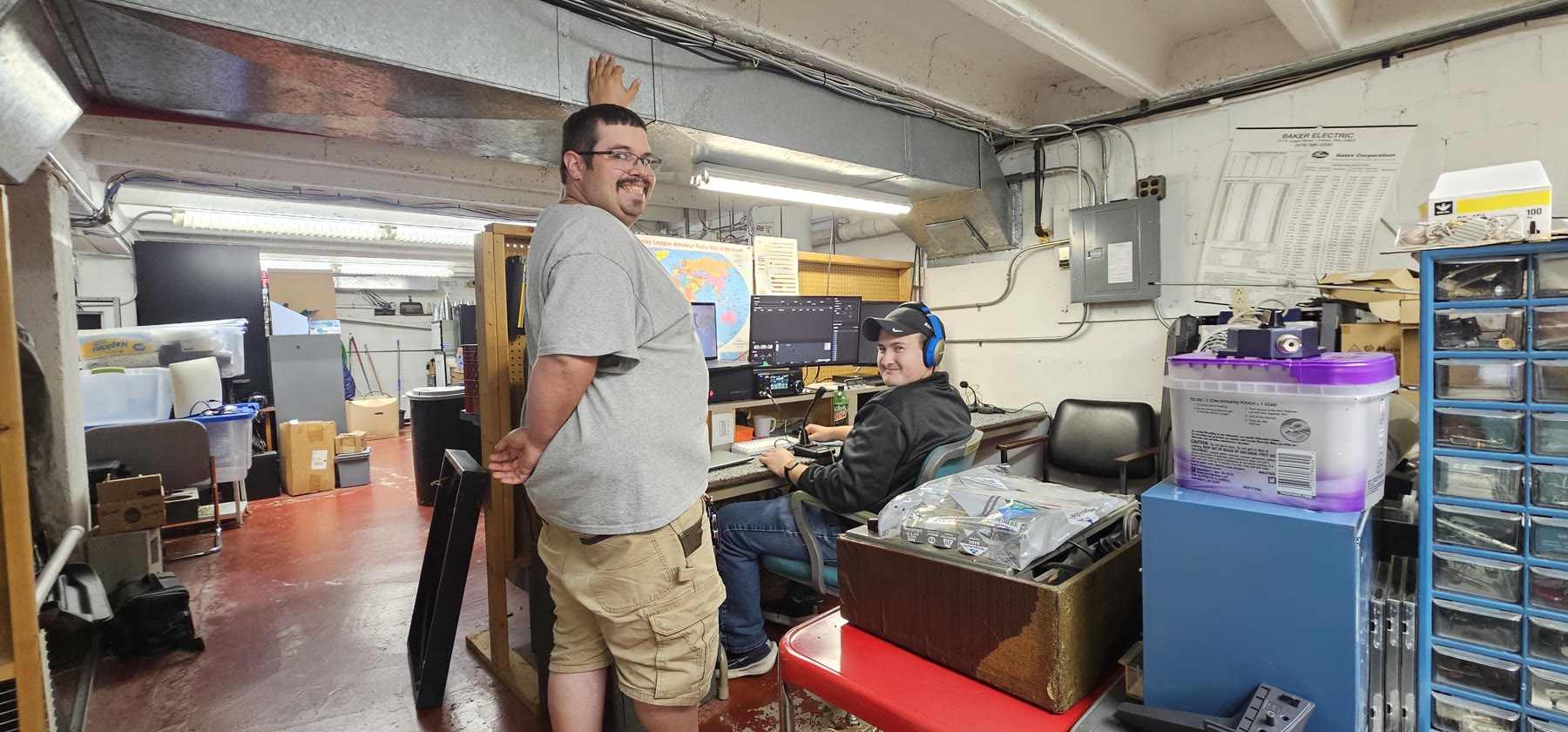
On Saturday, August 15, we made our first semi-serious run at the North American QSO Party SSB, operating under the W8FY club callsign from the W8FY club station. We operated as a multi-operator station with two transmitters, keeping our output at the contest limit of 100 watts or less. By the end of the event, we had logged 313 valid contacts, found 79 multipliers, and reached an estimated score of 24,727 points.
That was a satisfying result for a first real attempt, especially because the day was about much more than the score. We tested new equipment, worked around antenna problems, welcomed visitors, learned where our setup needs improvement, and had a great time doing it.
By the Numbers
The log tells the story of the day:
| Band | QSOs | Multipliers |
|---|---|---|
| 160 meters | 6 | 6 |
| 80 meters | 7 | 5 |
| 40 meters | 221 | 42 |
| 20 meters | 53 | 20 |
| 15 meters | 26 | 6 |
| 10 meters | 0 | 0 |
| Total | 313 | 79 |
Three operators put contacts in the log: KD9YVI made 226, N0SYS made 85, and KE8PYI made 2. The first QSO was logged at 18:15 UTC and the last at 05:58 UTC, giving us activity across almost the entire 12-hour contest window despite taking breaks along the way.
The complete W8FY contest log is available in a searchable online view, along with band and operator statistics. The original spreadsheet and a CSV export can also be downloaded there.
Forty Meters Did the Heavy Lifting
Our main antennas were the 40-meter dipole and the 20/15/10-meter beam. Forty meters was easily our strongest band, producing 221 QSOs and 42 multipliers—more than two-thirds of all our contacts.
The higher bands still contributed useful contacts and multipliers. We made 53 contacts on 20 meters and 26 on 15 meters. Ten meters never made it into the log this time, but that gives us another target for the next event.
The biggest limitation was on the low bands. Our 160- and 80-meter dipole was down, so we had to fall back to a Butternut vertical on 80 meters. It got us on the band, but the results were less than stellar: seven contacts and five multipliers. We managed another six contacts and six multipliers on 160 meters.
Those numbers made the lesson very clear. We left a lot of valuable low-band multipliers on the table. We hope to have the dipole repaired before the next QSO Party so we can make a much stronger showing on 80 and 160 meters.
A New Radio Gets a Real Workout
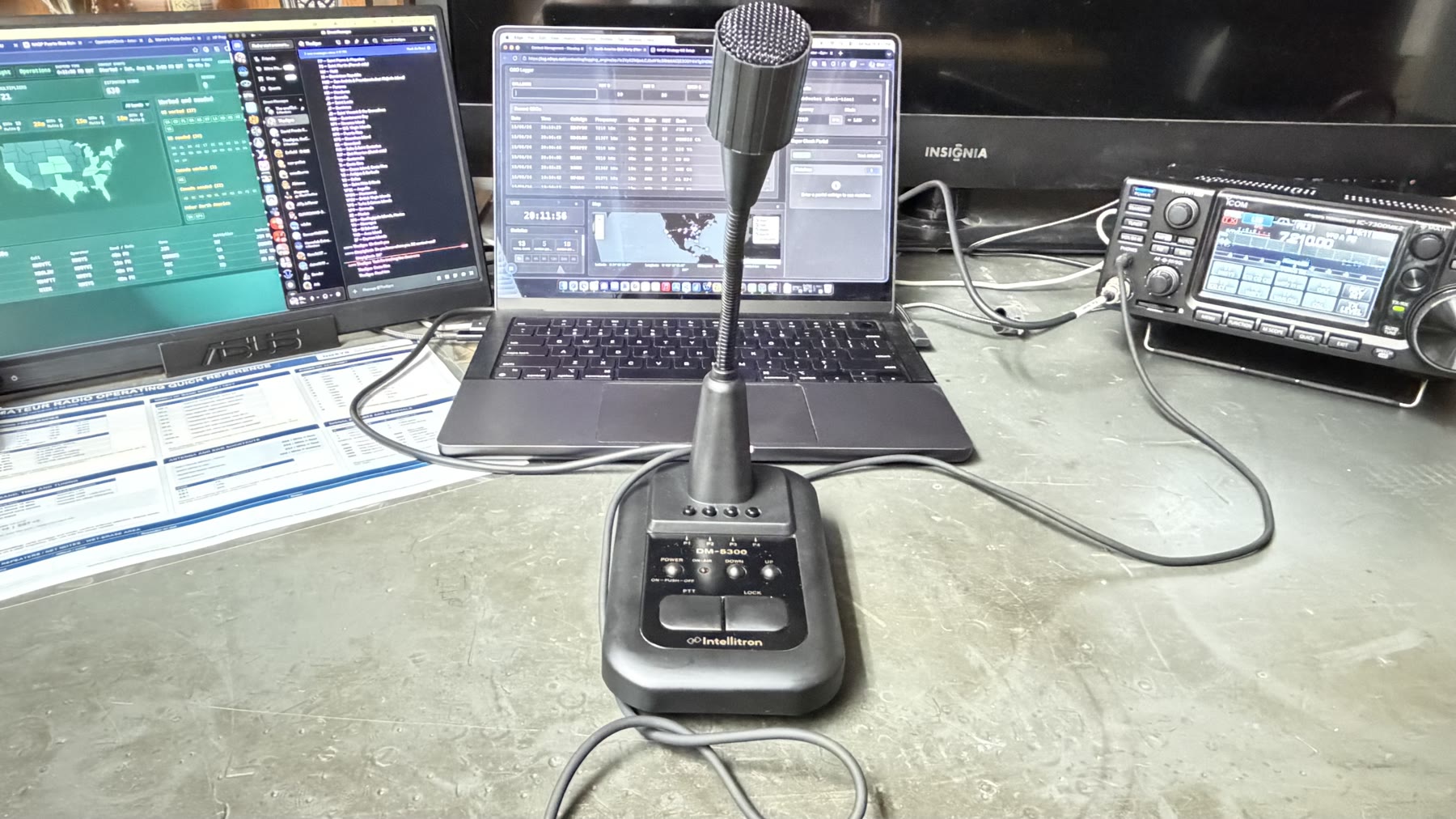
This contest was the first big stretch for my new Icom IC-7300MK2, which had arrived earlier in the week. A full day of SSB contesting is a much better test than a few casual contacts, and the radio performed very well. I am extremely happy with the purchase.
One feature became especially valuable as the hours added up: the radio’s voice recording and transmit capability. Using recorded contest messages saved my voice a tremendous amount of stress while keeping repeated calls and exchanges clear and consistent. By the end of the night, I was very thankful to have it.
Logging as a Team
It deserves repeating that every one of these contacts was made using W8FY, from the club’s station. This was a club effort from beginning to end, and it gave us an excellent opportunity to exercise the station, learn how our equipment behaves under contest conditions, and build experience together.
Wavelog was instrumental in making the multi-operator setup work. Its club mode kept both stations together under W8FY while still recording the individual operator responsible for each contact. The finished log shows how the work was shared among the operators and gives us solid information to review before our next contest.
We also built a custom contest dashboard to show our valid QSOs, multipliers, estimated score, band totals, worked areas, needed areas, and recent contacts. Instead of guessing how we were doing, everyone could see the same picture at a glance.
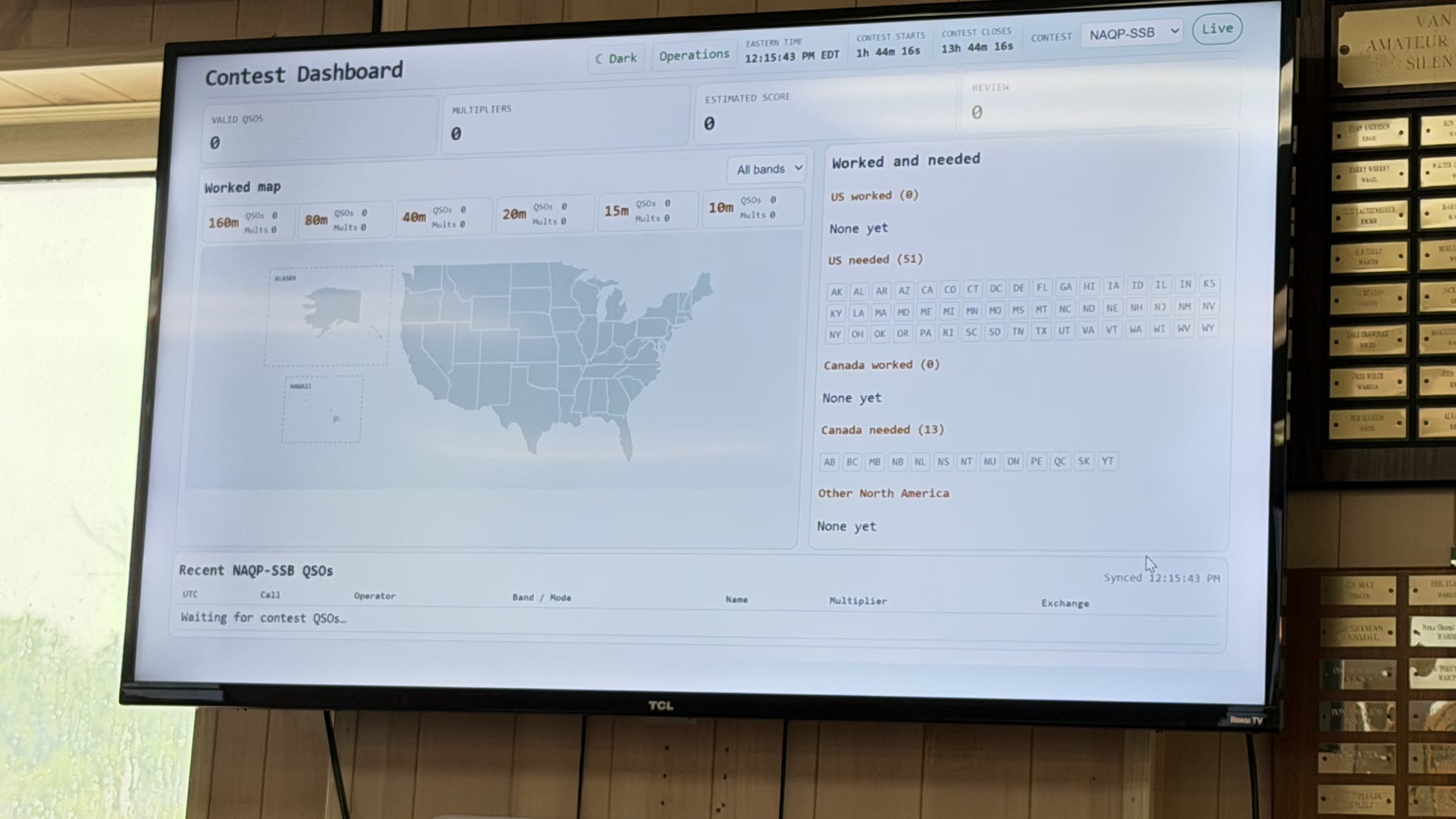
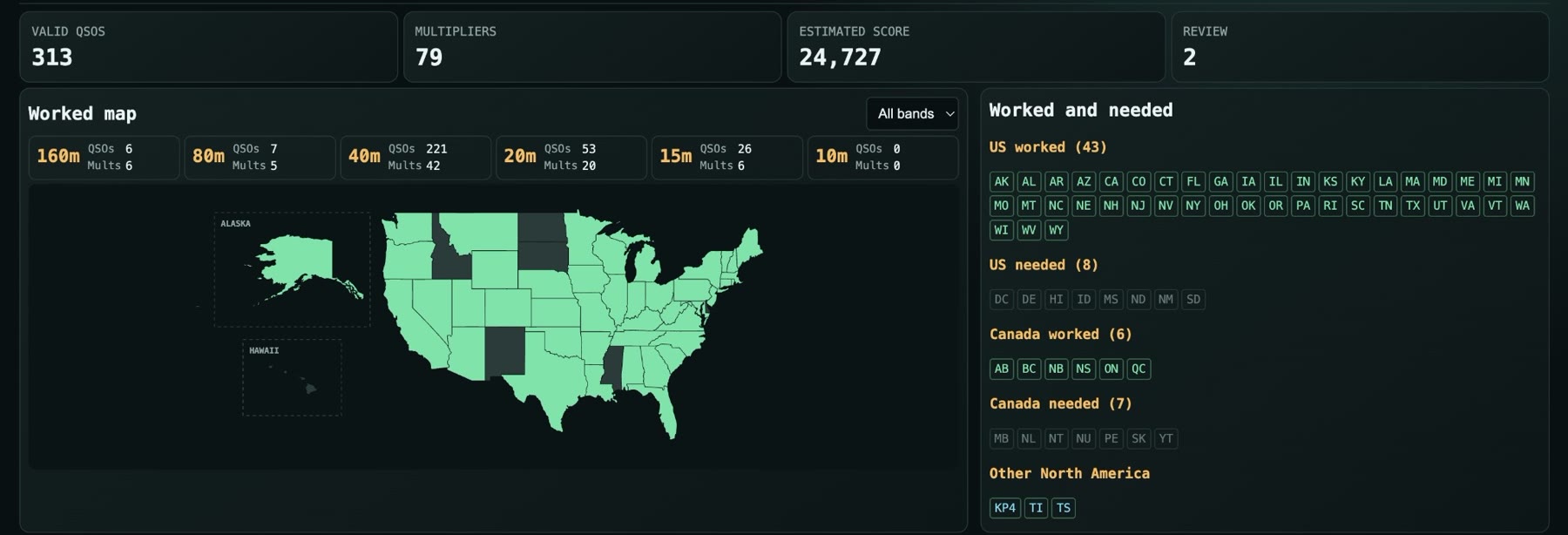
This is only the first version. We plan to expand the dashboard so others can follow our progress live. We also want to display it in the conference-room area, where club members and members of the public can watch the map fill in and see the score grow while visiting our station.
More Than a Contest Station
Although we participated across the full contest period, the radios were not the only thing happening. Saturday was also the date of our regularly scheduled W8FY club meeting, so we paused contest operations for the meeting. Several club members, our EMA director, and family members also stopped in during the day to see how everything was going, talk radio, and enjoy some ragchewing.
The best break came around dinner time. My wife, Jennifer, and our boys, Emmett and Elliott, brought pizza, and we all sat down to eat together away from the radios for a while.
Jennifer and the boys deserve a special thank-you for supporting this hobby and letting me spend the better part of the day at the station. Contesting may happen behind a microphone, but an operation like this depends on the patience and support of the people at home, too. The pizza delivery was the perfect reminder of that.
What We Are Taking Into the Next One
We approached this event more seriously than any contest we had operated before, but we still kept the most important part intact: we had fun. We learned how the two-station setup behaves over a long event, saw where Wavelog and the dashboard helped our operators, gave the new Icom a real workout, and identified antenna work that can directly improve our next score.
Our next steps are straightforward: repair the low-band dipole, keep improving the live dashboard, tighten up our operating plan, and return ready to hunt down more of those tasty multipliers.
For a first semi-serious effort, 313 contacts is a result we can be proud of—and a very good starting point for the next North American QSO Party.