> READ FIRST-HF-FROM-HOME
First HF contacts from home
First HF Contacts from Home
After upgrading to General, I finally got on HF from home for the first time. The station for the evening was my FT-991A feeding a club project 49:1 end-fed half-wave antenna, with Wavelog running so I could start treating my contacts like an actual logbook instead of a pile of scattered notes.
I made 11 contacts during the session. Most of the time was spent piddling around with the radio and software: moving around the bands, learning the controls in a real operating setting, and getting a feel for how the station behaved from the house.
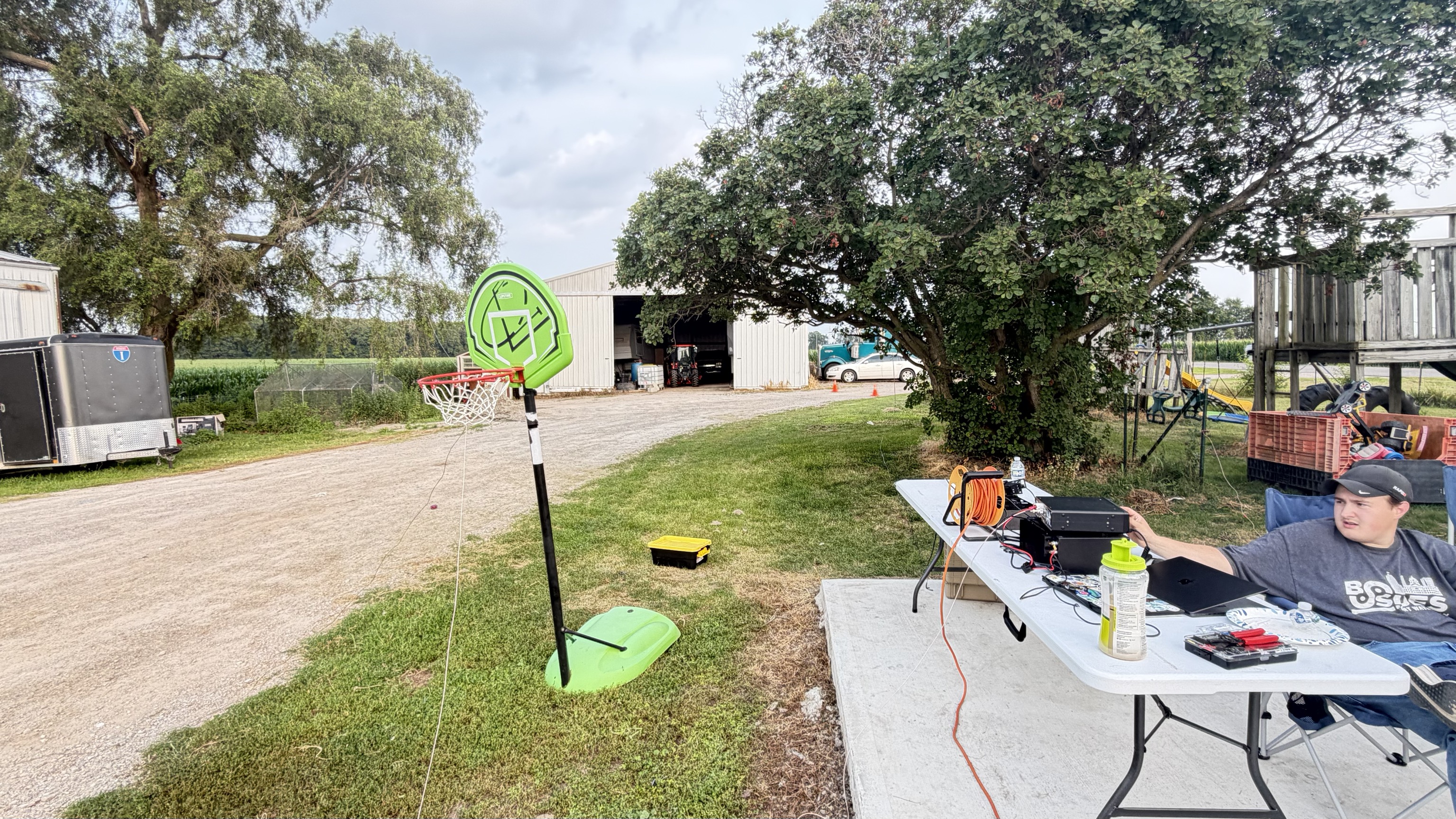
Getting the Wire in the Air
The biggest challenge was not the radio, the logging software, or even getting over the first-contact nerves. It was getting a good throw line into place.
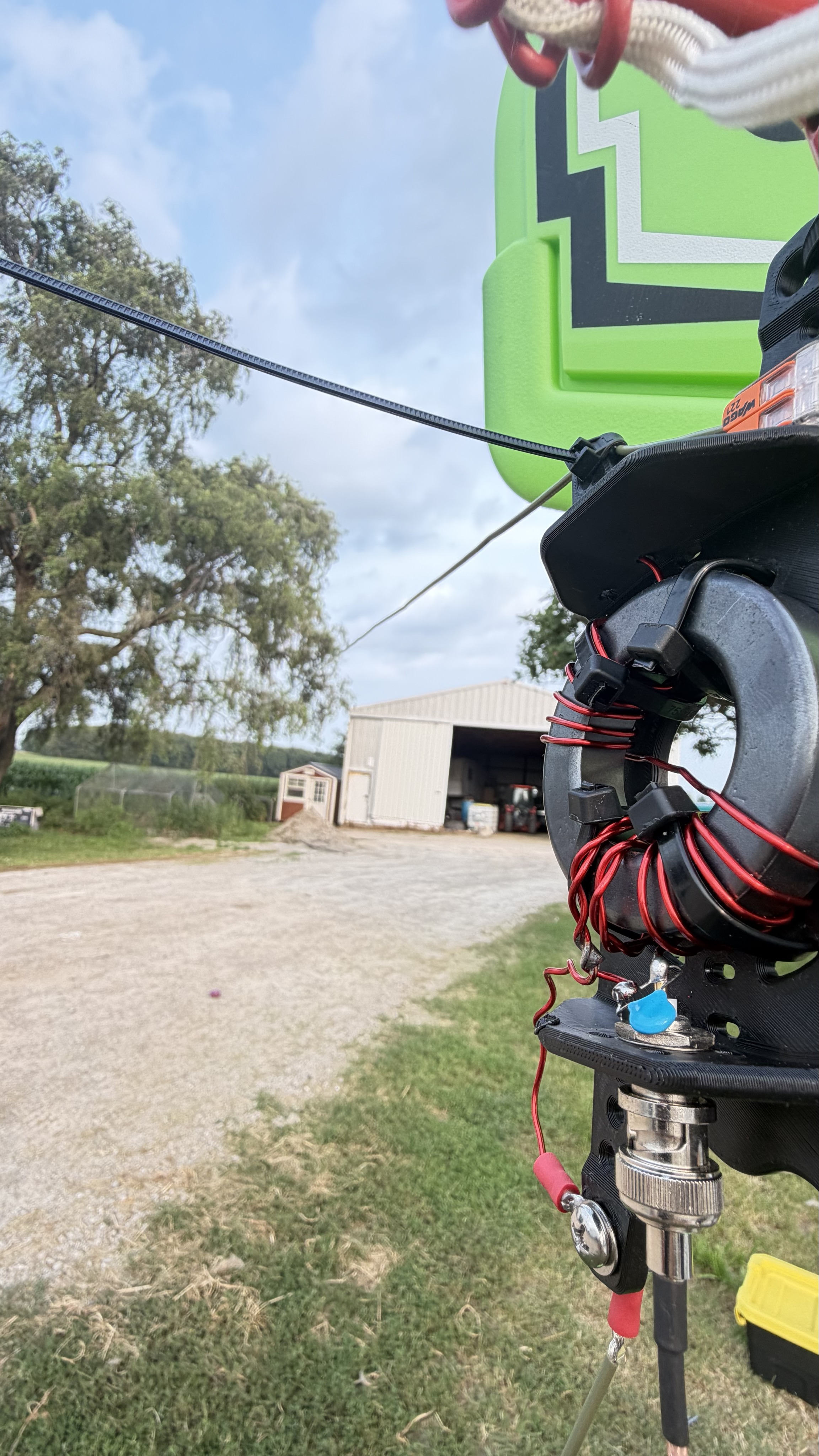
Without a proper launcher ready to go, we improvised. A kids basketball hoop ended up becoming part of the antenna support system, and after some experimenting we got the end-fed half-wave up with good results. It was not the most elegant launch system ever designed, but it worked well enough to get RF moving.
KD9YVI and the G90
KD9YVI came over and operated as well, bringing a Xiegu G90 and a Sport Forty antenna. Thad had recently picked up the G90 from W8FY at the last hamfest, so this was a good chance to put it on the air and compare notes.
I got to operate the G90 for a bit, and it is a nice little radio. The receiver and portability make it easy to understand why people like them. That said, it definitely does not have the same punch as the 100 watt rig, especially when conditions and antenna height are already part of the experiment.
Wavelog
This was also my first real push to use Wavelog as part of the station. Having a proper logbook with tracking already feels like a big improvement. Instead of just remembering that I got on the air, I can start looking back at bands, modes, stations worked, and how the setup performed over time.
For this first session, the headline is simple: 11 HF contacts from home, all on SSB. The log shows 8 contacts on 20 meters and 3 contacts on 40 meters, including two POTA contacts and a few that reached well beyond the Midwest.
One of the more interesting contacts was VP5G, a special call operating from North Caicos Island for the 50th year of their constitution. They were QRV July 17-28, 2026 and planned to take part in the IOTA contest from NA-002. The station notes listed a Butternut HF9V, link dipole, 4 element 6 meter beam, FT-891, and Juma PA1000. QSL was via M0OXO, with no eQSL.
| Call | Band | UTC | Grid | QTH | Distance |
|---|---|---|---|---|---|
| K0KYL | 20m | 2026-07-26 20:08 | EN23 | Minnesota, MN | 555.1 mi |
| W8EKM | 40m | 2026-07-26 21:18 | EN72 | Gregory, MI / POTA US-3310 | 109.0 mi |
| AD2LD | 20m | 2026-07-27 00:05 | FN12 | Candor, NY / POTA US-5294 | 411.7 mi |
| VE3HA | 20m | 2026-07-27 00:48 | FN03HR | ORO STATION, ON | 333.7 mi |
| W9IMS | 40m | 2026-07-27 01:25 | EM69 | Indianapolis, IN | 156.5 mi |
| S51DX | 40m | 2026-07-27 01:35 | JN75DX | 1360 Vrhnika | 4636.2 mi |
| S58N | 20m | 2026-07-27 02:22 | JN76FA | 1002 Ljubljana | 4641.0 mi |
| NG0Z | 20m | 2026-07-27 02:27 | EN34 | Minnetonka, MN | 487.2 mi |
| KC9RF | 20m | 2026-07-27 02:56 | EN56 | Land O Lakes, WI | 439.9 mi |
| VP5G | 20m | 2026-07-27 02:59 | FL41AW est. | North Caicos Island / IOTA NA-002 | ~1508.9 mi |
| TI5/N3KS | 20m | 2026-07-27 03:21 | EK70LR | Bijagua | 2087.2 mi |
Notes for Next Time
- Set up a better throw line and launcher before the next antenna session.
- Keep refining the EFHW placement and height.
- Pull more detail from Wavelog for bands, modes, distances, and worked stations.
- Spend less time chasing software settings and more time operating.
Overall, it was a good first evening on HF from home. The setup was improvised in a few places, but it worked, and that is the part that matters. The station is no longer just theoretical; it is on the air.