> READ 50-FOOT-TOWER-ACQUISITION
Bringing Home a 50-Foot Crank-Up Tower
Bringing Home a 50-Foot Crank-Up Tower
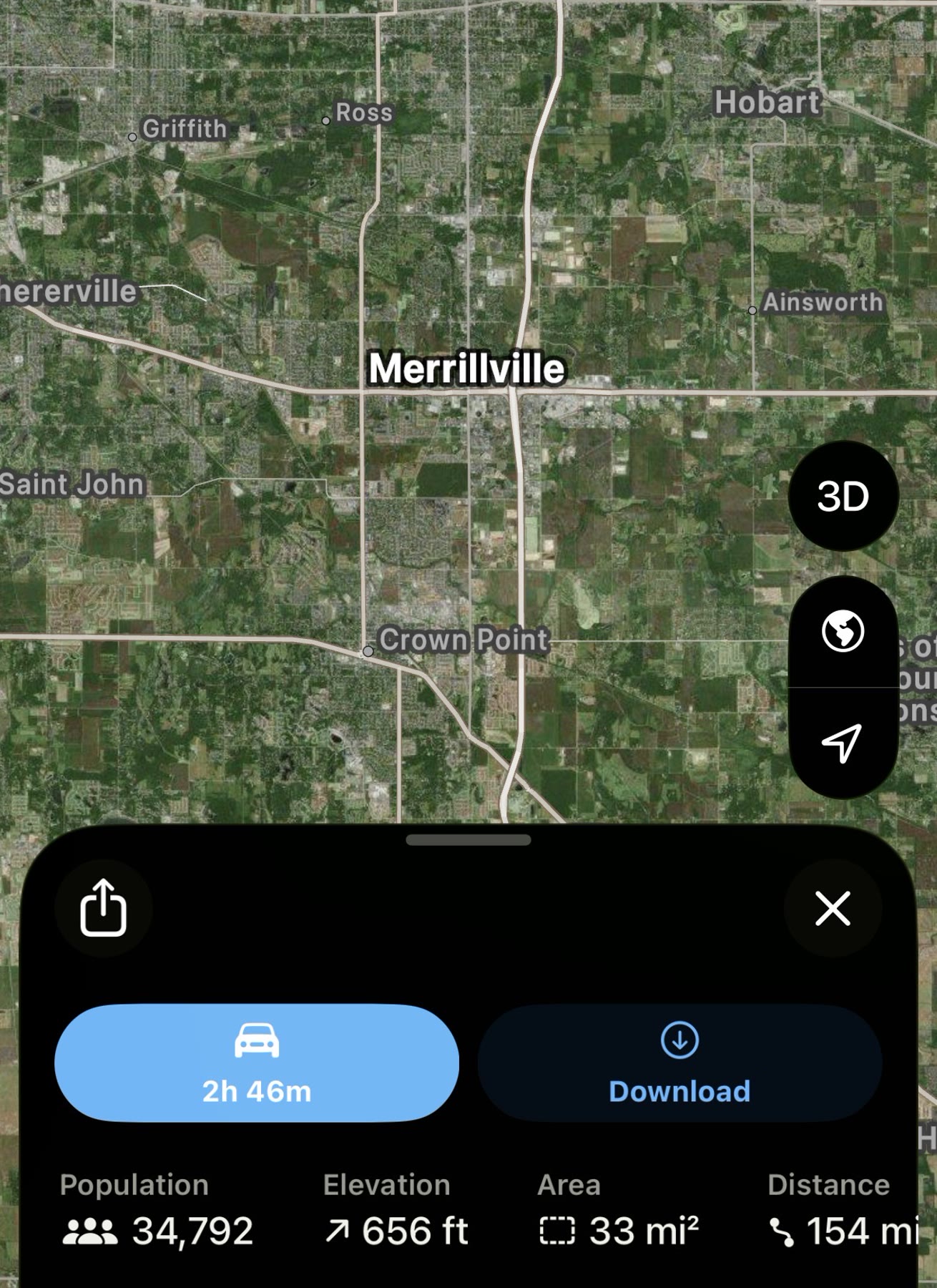
Today’s mission was to bring home a 50-foot crank-up, tilt-over tower from Merrillville, Indiana. It was a two-hour-and-45-minute trip each way, so this was never going to be a quick run with one truck and a basic tool bag.
We took two pickups, a tractor, a 30-foot gooseneck trailer, and a car trailer. Because of the distance, we also packed just about every tool we could come up with a reason to take. If something went wrong nearly three hours from home, we wanted a way to deal with it.
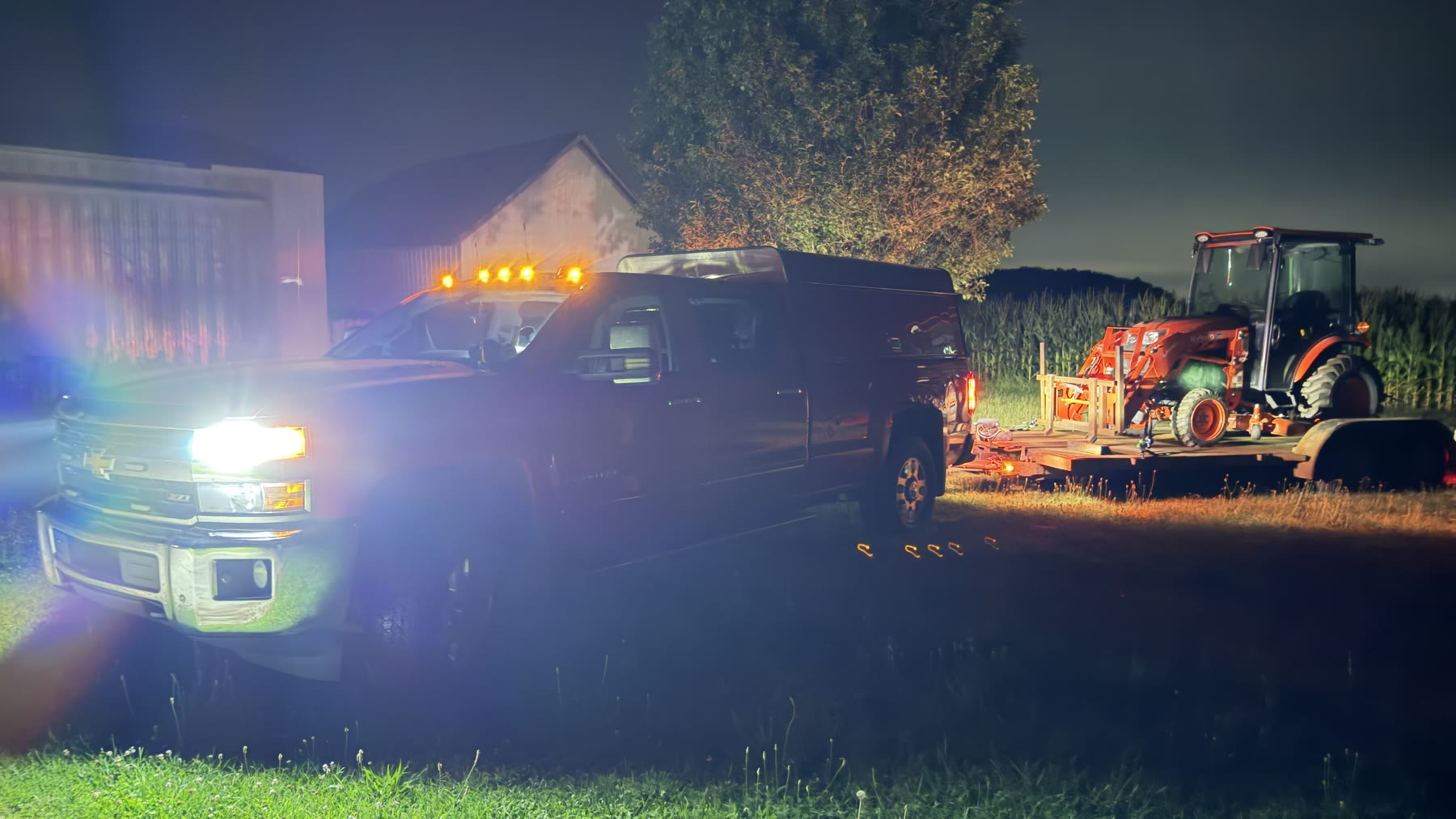
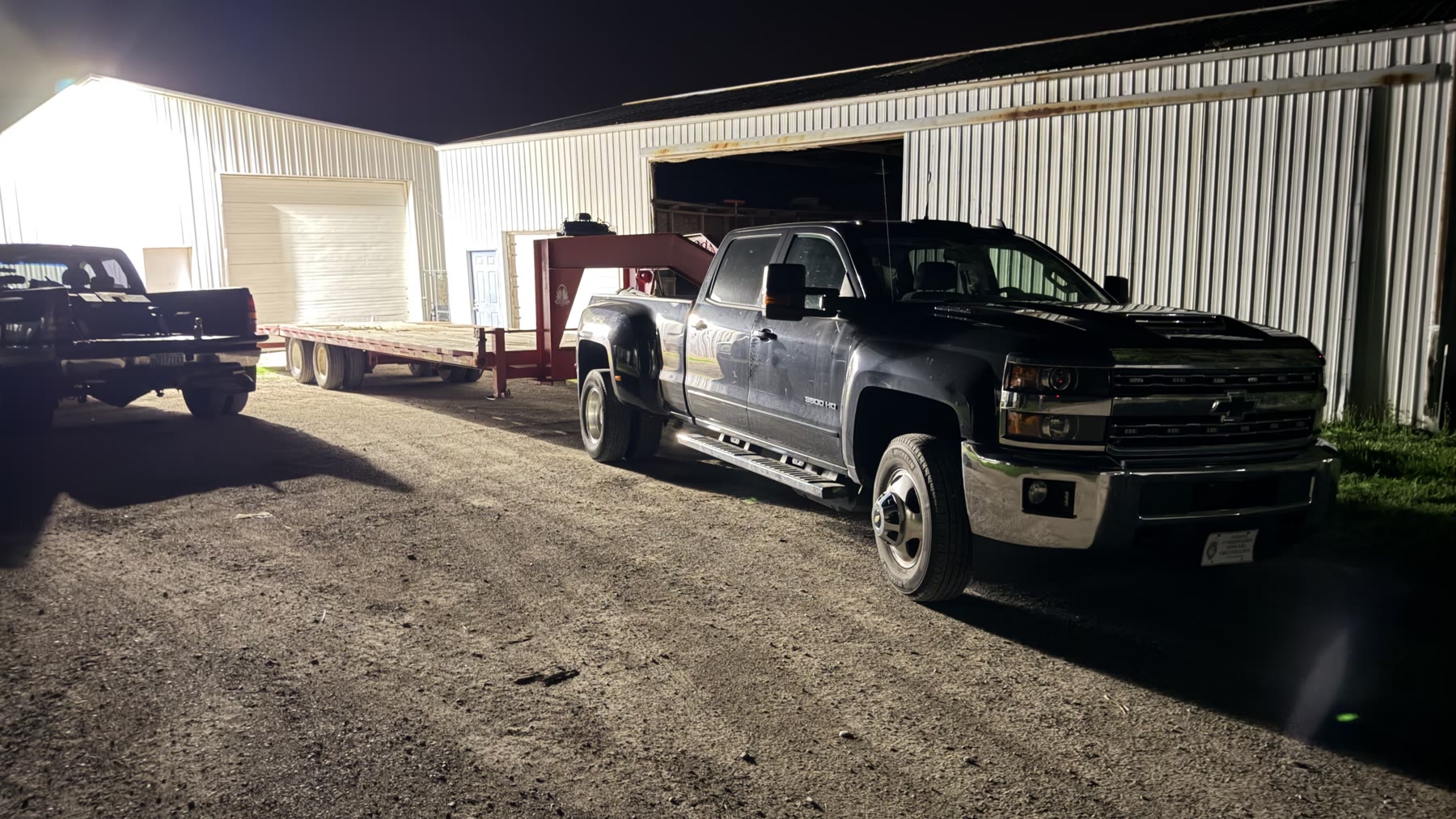
The Crew
There were four of us on the job:
- Me
- Paul, my dad
- Dustin, my brother-in-law
- Zach, my lifetime friend
Without them, this would not have happened. Everybody was dedicated enough to get up at 5:00 a.m. and spend most of the day traveling and working.
Dad and I left my house at 5:00 a.m. We picked up Zach about 30 minutes later in Fort Wayne, continued to Pierceton to pick up Dustin, and then headed west toward Merrillville.
First Look at the Tower
When we arrived, we started by inspecting the tower and planning how to get everything out safely. The tower was still standing with several large antennas and a lot of feed line attached, so the first major step was to use its tilt-over system and bring the structure down where we could work on it from the ground.
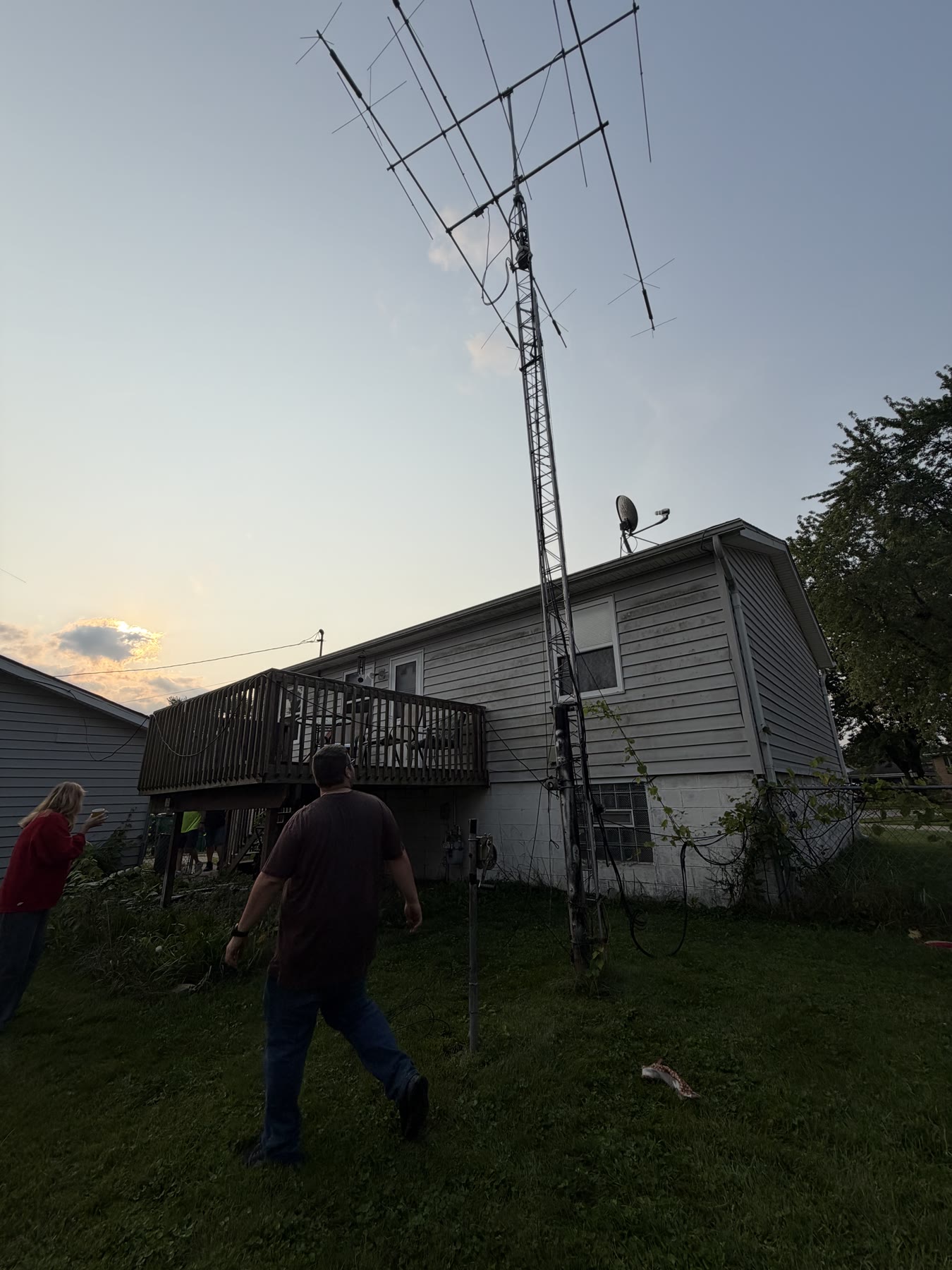
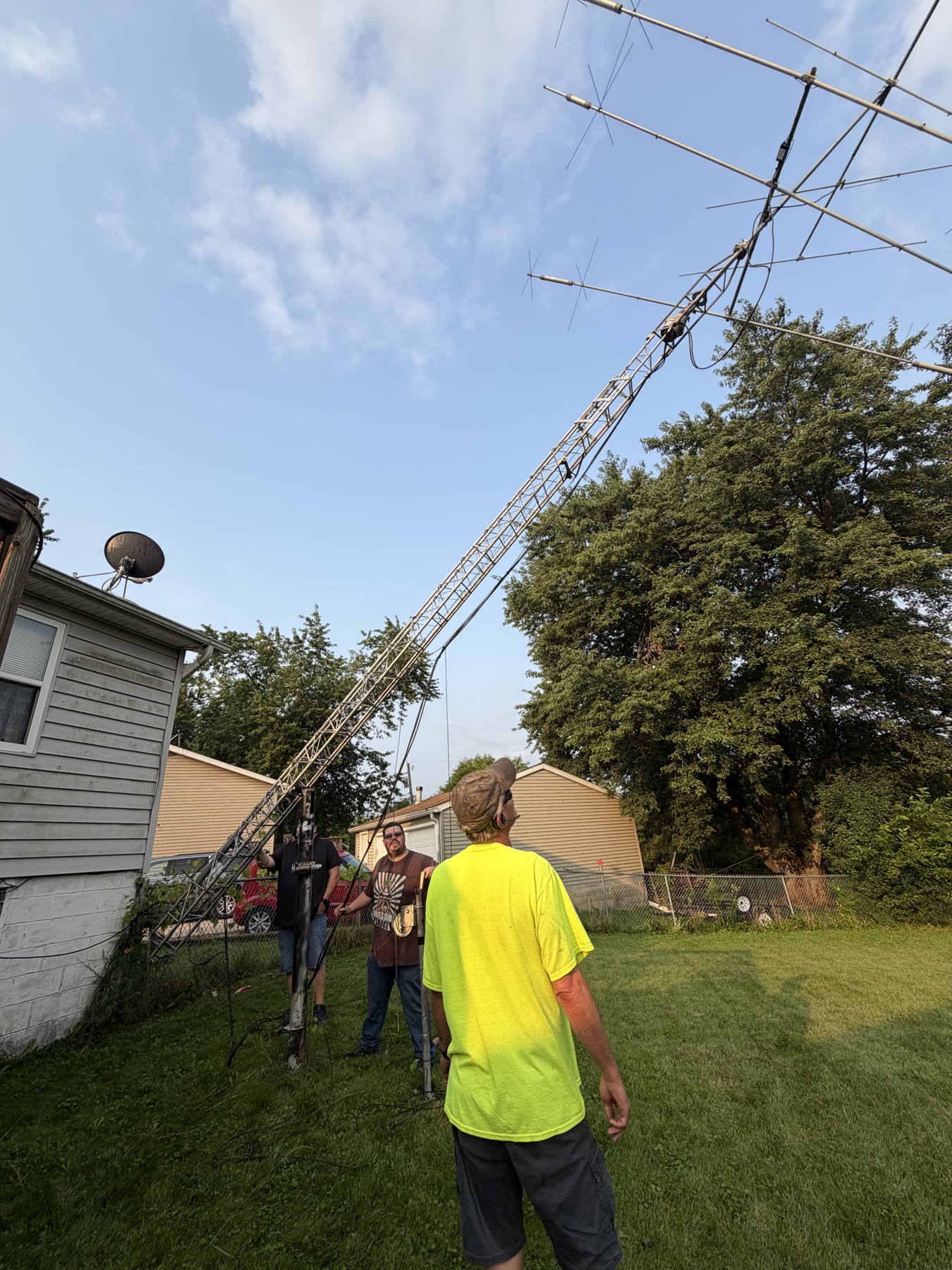
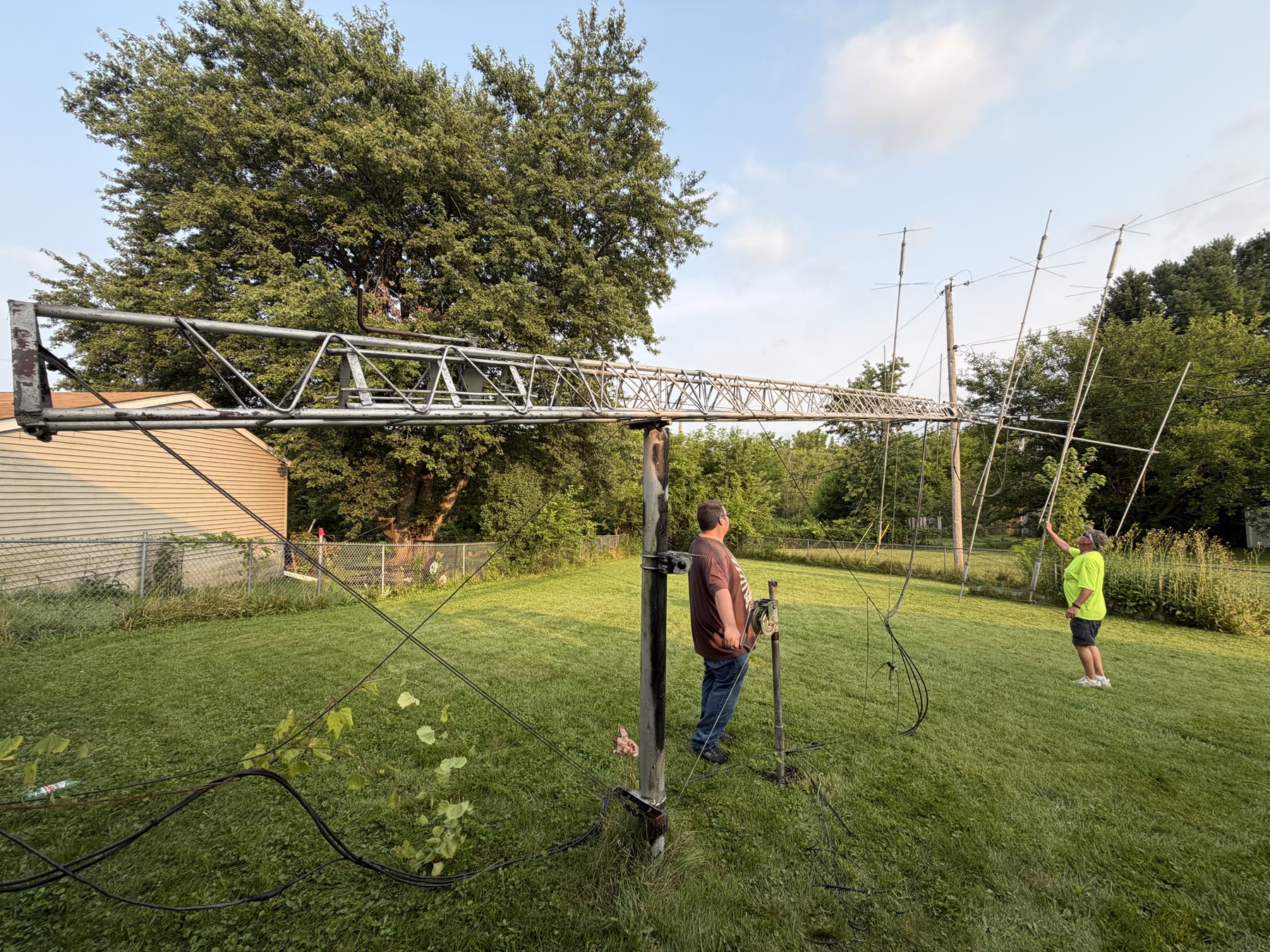
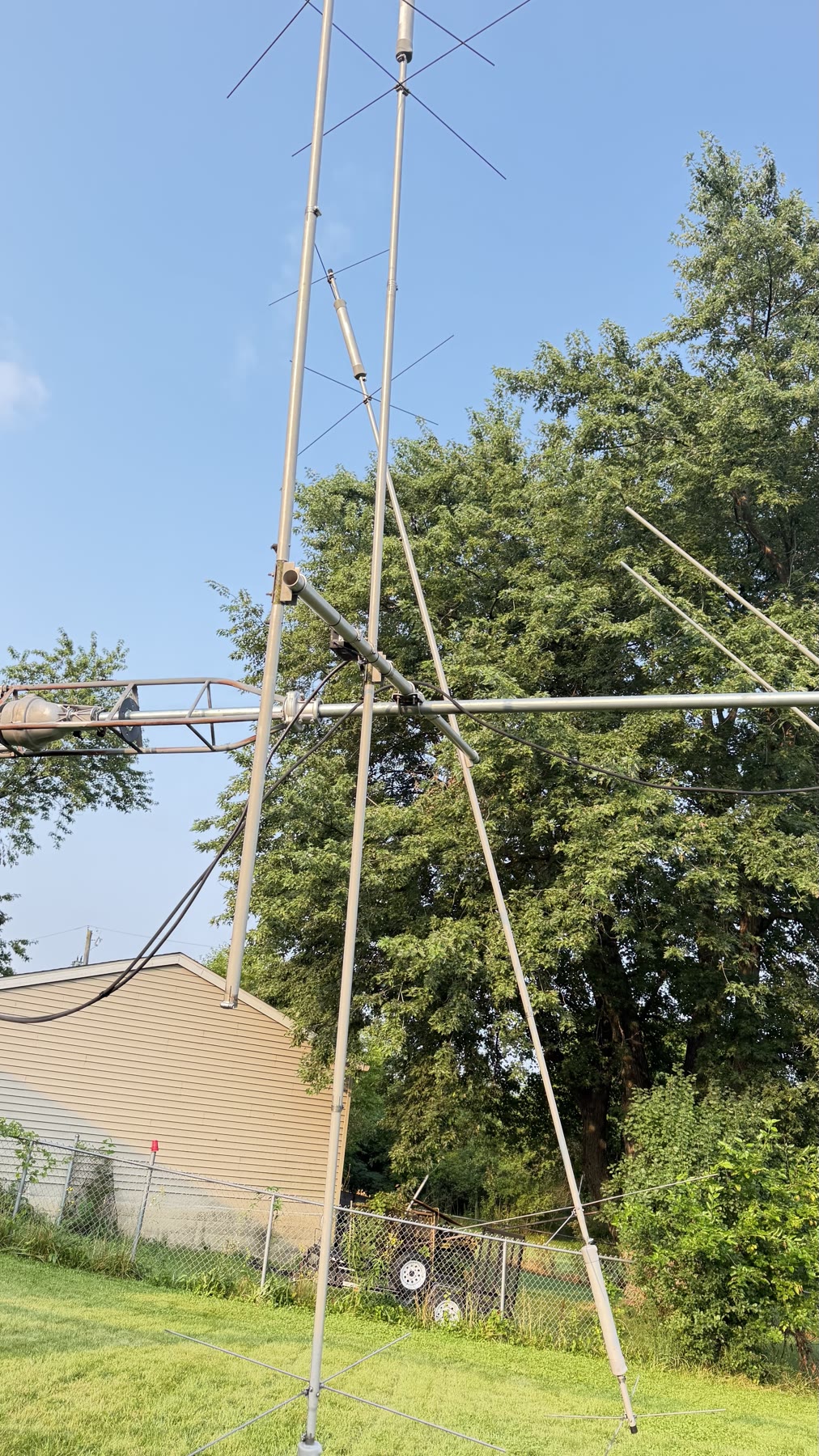
The main tower structure came down without any real trouble. Once it was horizontal, we could begin disconnecting feed lines and removing the antenna array piece by piece.
Working in a Cul-de-Sac
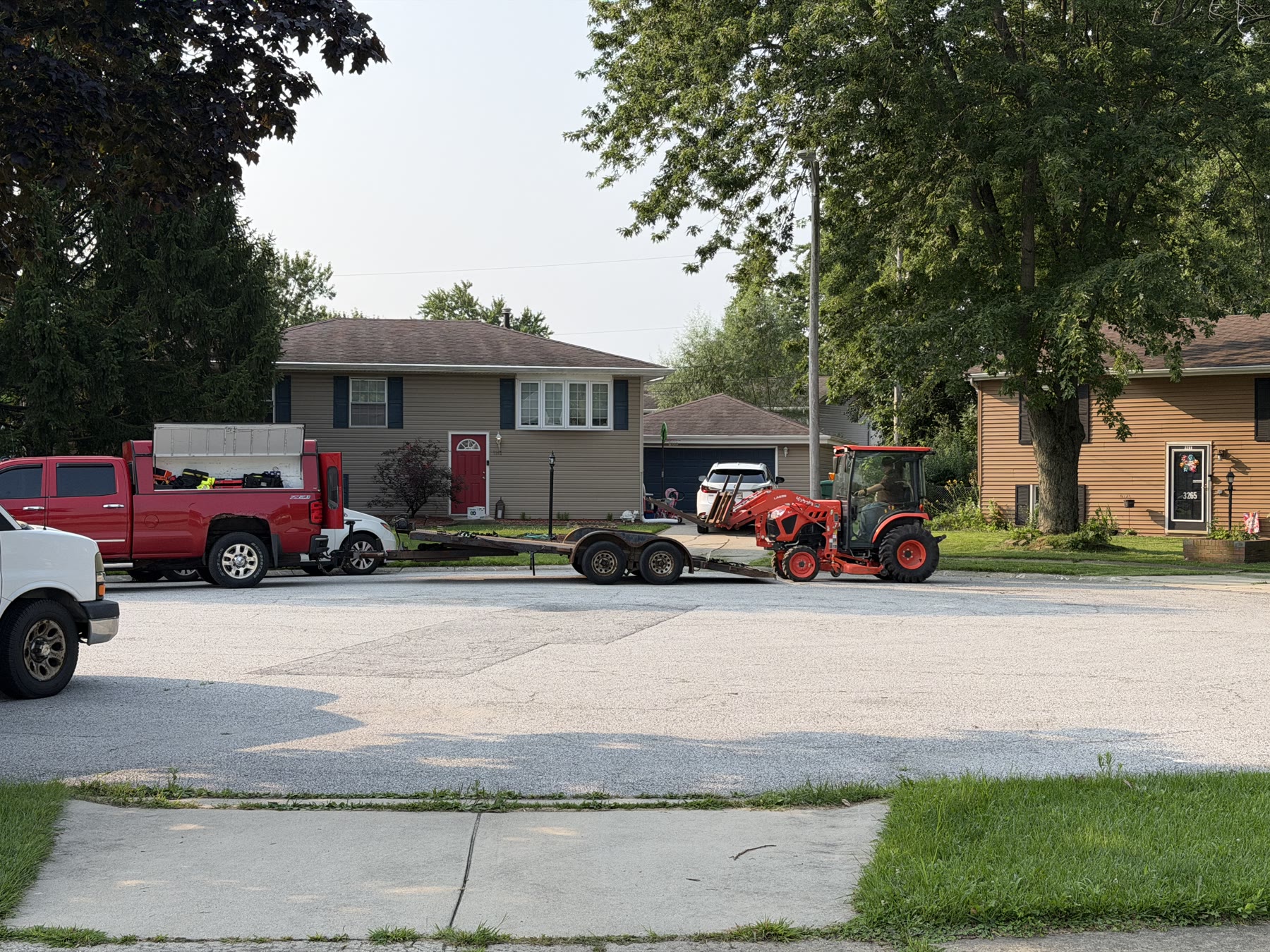
One of our biggest challenges was not the tower itself—it was the location. The house was in a subdivision on a cul-de-sac, and there was very little room for two pickups, two trailers, and a tractor.
I was able to bring the truck, car trailer, and tractor into the cul-de-sac. The 30-foot gooseneck was a different story. We waited until later in the job to back it down the road, knowing it would block the street while we loaded because there was no room to turn it around near the house.
Tractor Work
The tractor earned its ride. We used the loader and forks to support and move the tower after the antennas were off, which gave us much better control over the long structure in the confined yard.
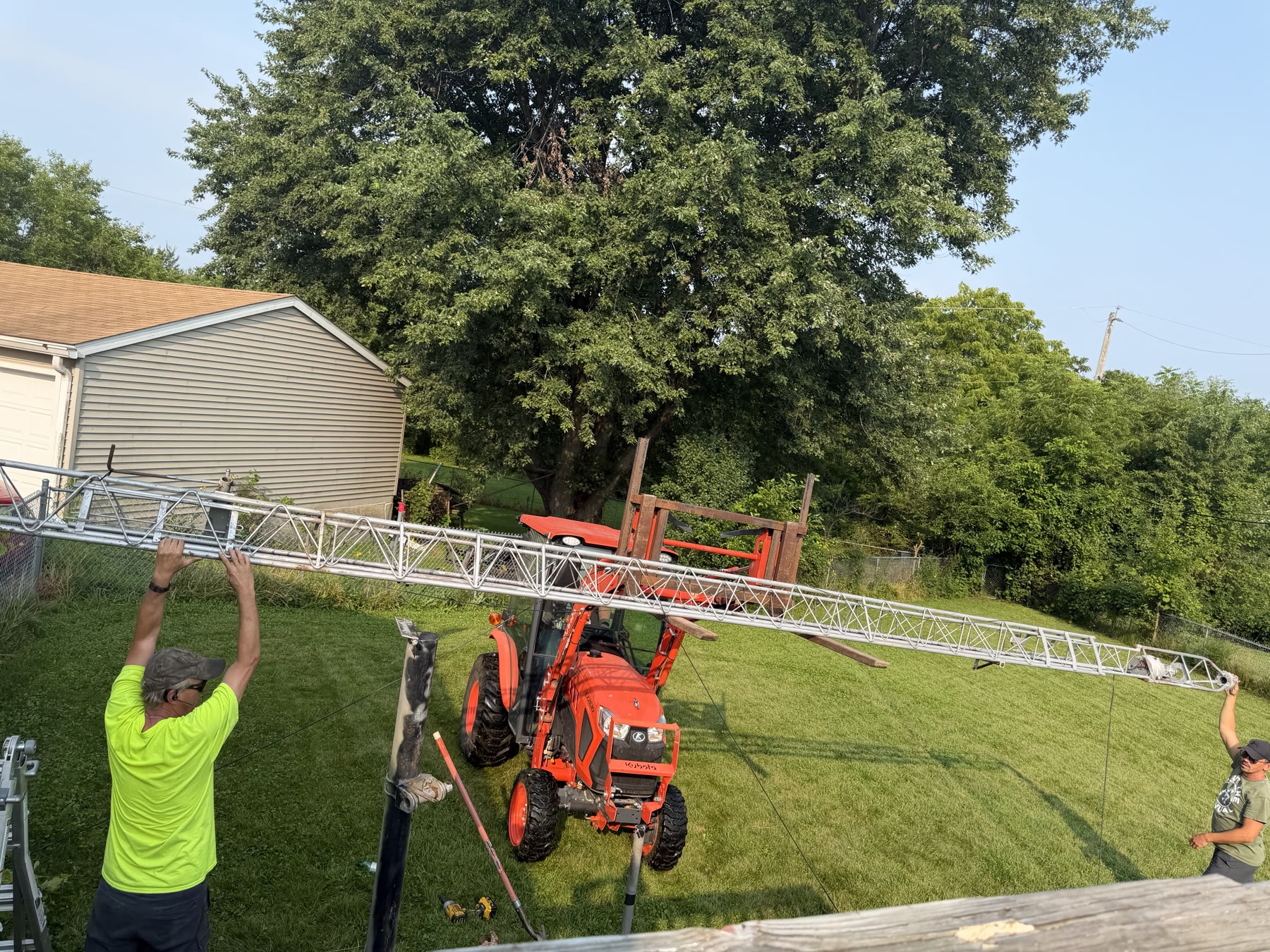
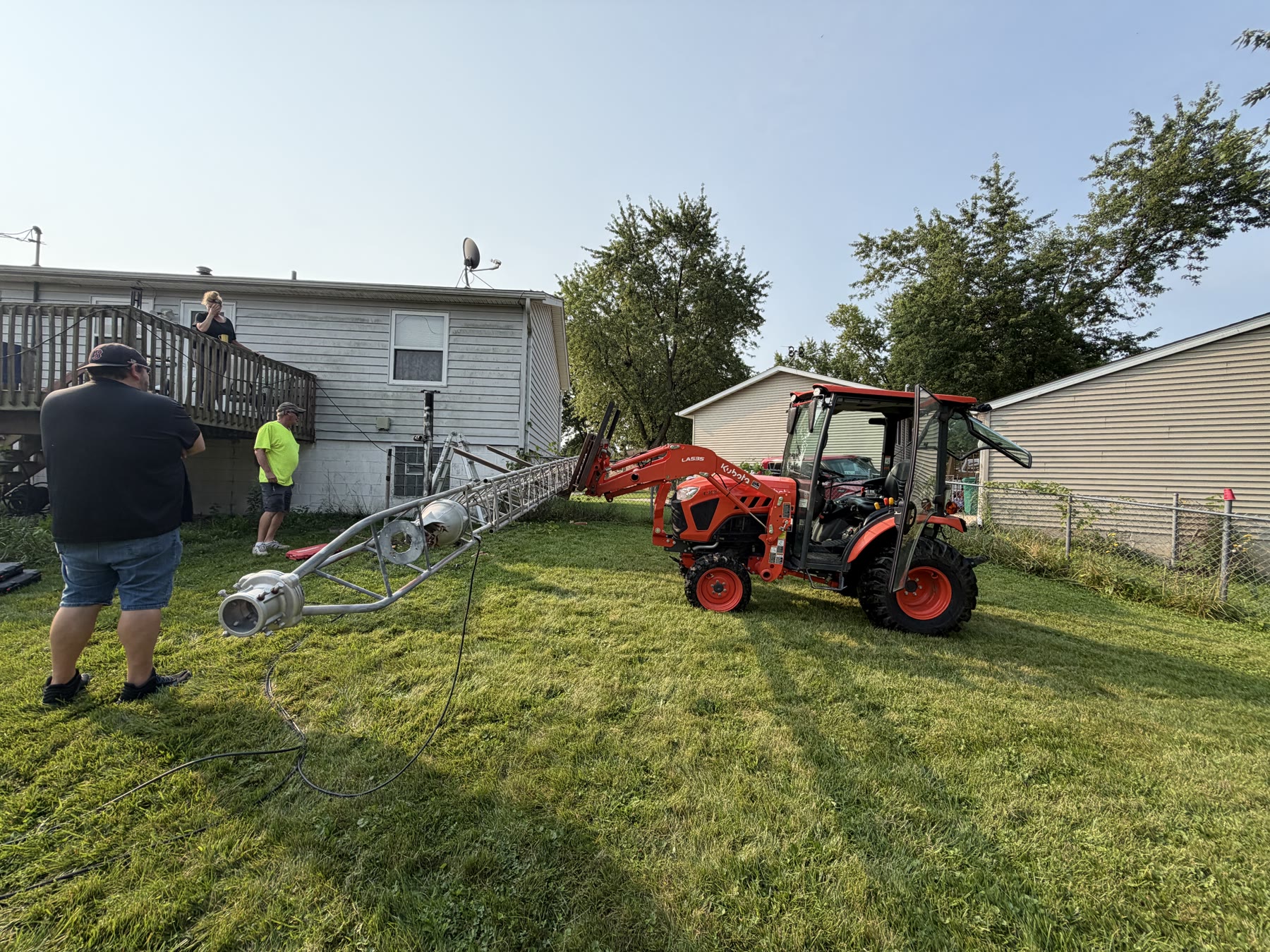
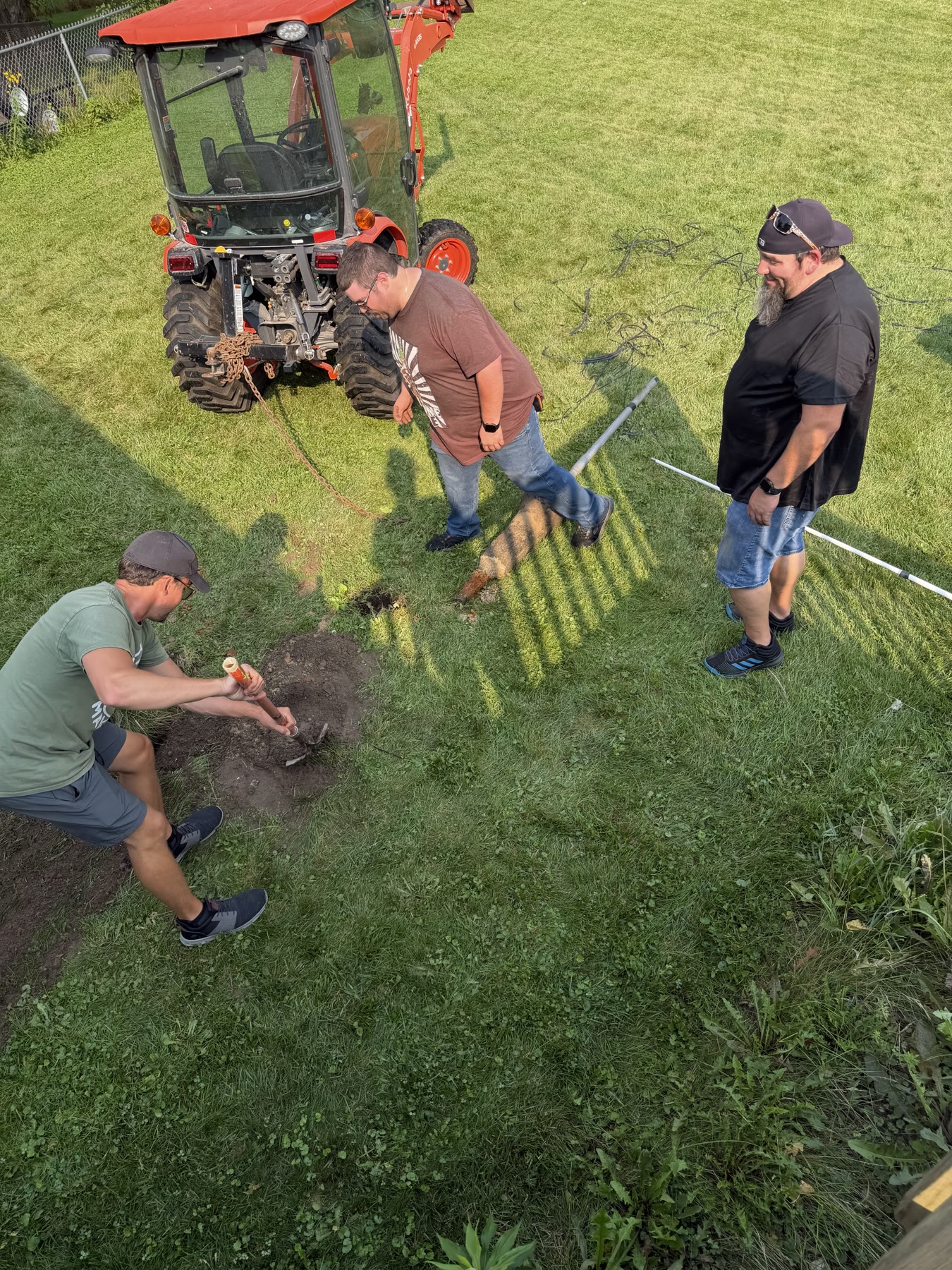
The part we were most worried about was the heavy mast buried in the ground. We expected to find a large concrete footing, but after digging down around it we found that it was not set in concrete. That was a major break in our favor.
We wrapped a chain around the mast, connected it to the tractor’s three-point hitch, and worked it back and forth. With some wiggling and steady pressure, the whole mast pulled free.
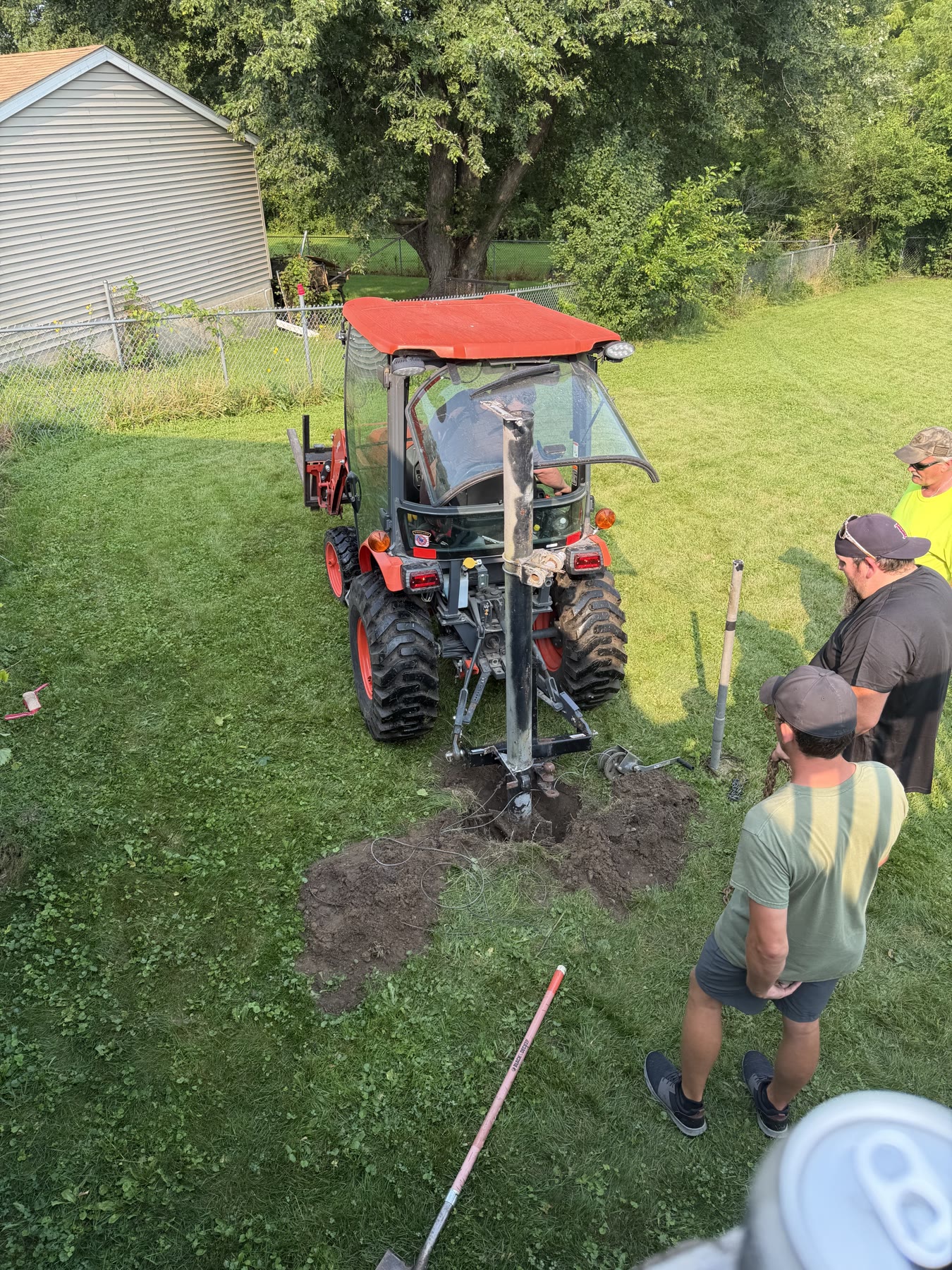
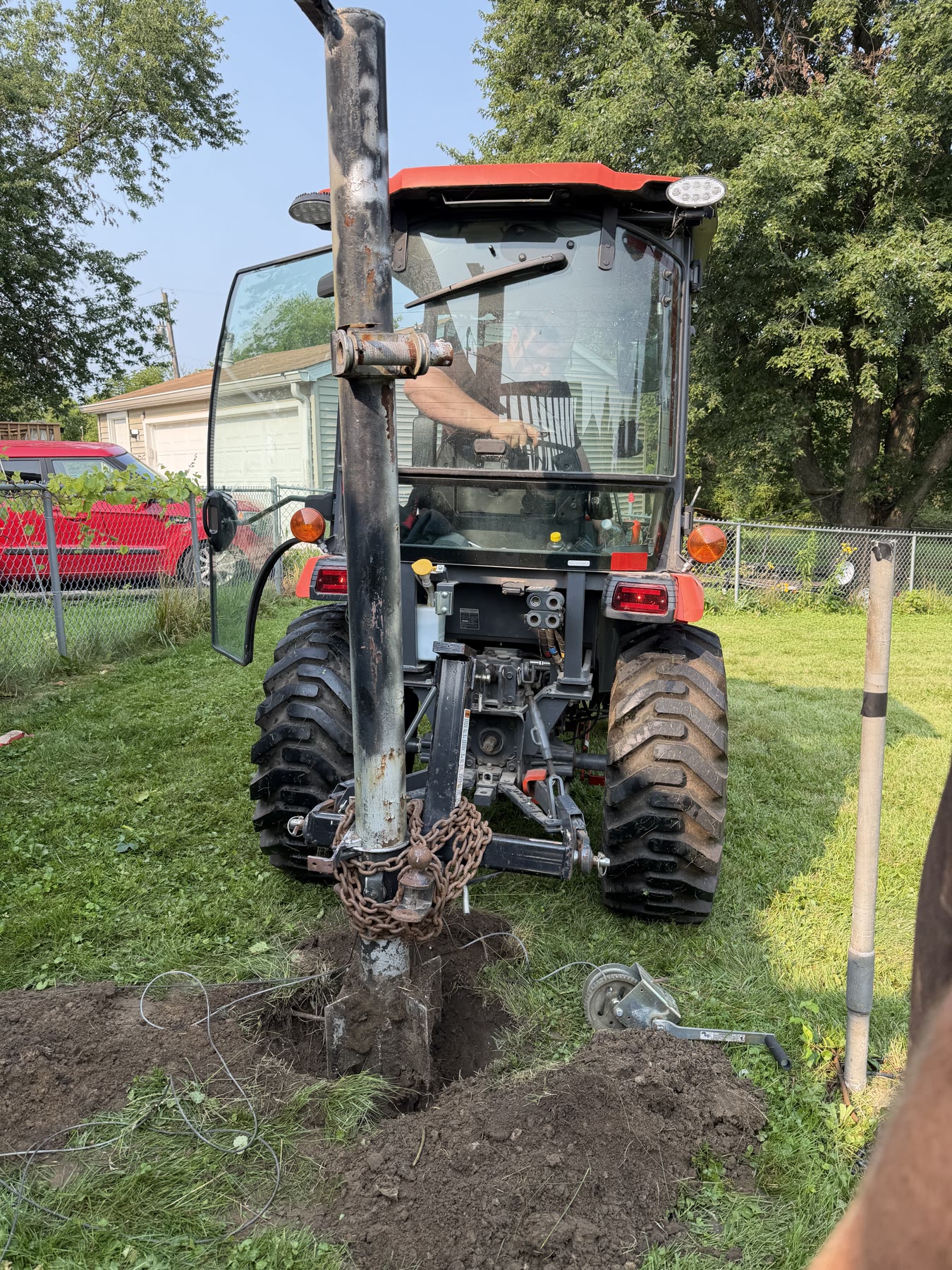
We also removed the separate winch pole. That one was set in concrete, but it surprised us by coming out cleanly as well. Getting both poles out without cutting them off was one of the biggest wins of the entire job.
Remembering K9DLJ
The tower came from the estate of George W. Kepshire, K9DLJ, and his daughter handled the sale. She was very communicative throughout the entire process, which helped us plan a complicated pickup from several hours away.
This tower also has some real amateur-radio history behind it. George’s obituary from Burns Funeral Home says he was born August 19, 1938, worked for many years at Inland Steel, and passed away on January 24, 2025, at age 86.
His call sign can be traced through radio publications more than 60 years into the past. A VHF report in the January 1964 issue of QST lists K9DLJ among a small group of stations worked on 432 MHz. The May 1963 issue of CQ also mentions K9DLJ among operators active in the region on 432 MHz. Those old reports back up what his daughter told us: George had been a ham for a very long time.
It is meaningful to know that this is not just a piece of steel. It was part of another ham’s station and decades of radio history. I am glad we were able to recover it complete and give it a chance to get back in the air.
Loaded and Headed Home
From the time we started inspecting the tower until everything was removed, loaded, and ready for the road, the entire job took about three hours. That was far better than any of us expected for a tower of this size in such a tight location.
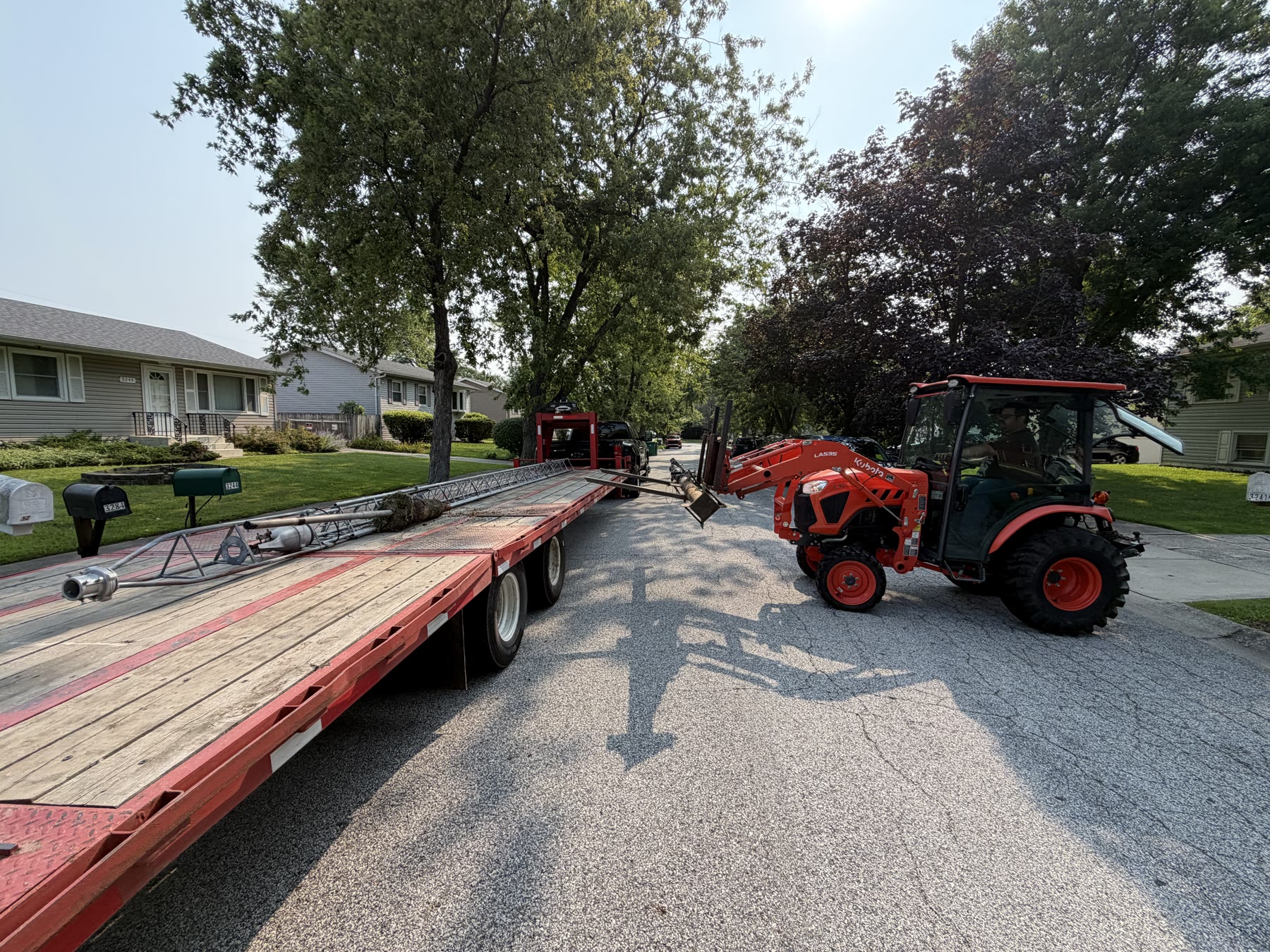
We laid the tower, mast, winch pole, and antenna components out on the gooseneck, then took our time strapping everything down. Once we were satisfied with the load, we started the long trip home. Other than the expected challenge of moving that much equipment that far, the return trip went smoothly.
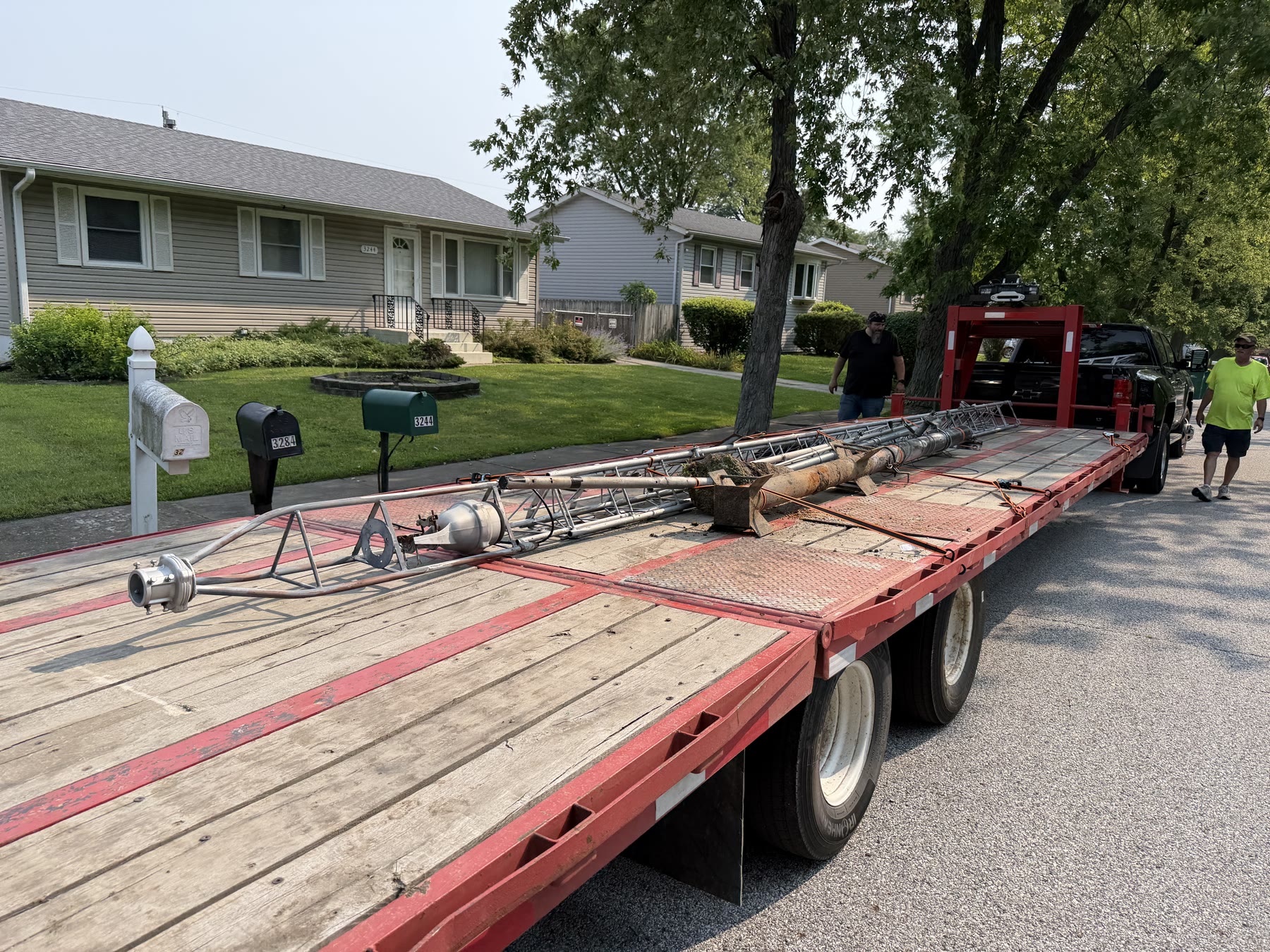
This was a long day, but it was a successful one. We brought home a complete 50-foot crank-up, tilt-over tower, preserved a piece of K9DLJ’s station, and did it without any major problems.
Most importantly, Dad, Dustin, and Zach gave up their time, got up before sunrise, and traveled across Indiana to make it happen. I could not have done it without them.